New Client? Enjoy Your First Comprehensive Exam for Just $35!



Can I Use Human Toothpaste on My Dog?
No, dogs should not use human toothpaste. Human toothpaste is designed to be rinsed and spit out, while dogs typically swallow what is placed in their mouths. Some formulas contain ingredients that may cause digestive problems or pose a more serious health risk if swallowed. Xylitol, for example, is highly toxic to dogs and may be found in some sugar-free or specialty oral-care products.
Keeping your dog’s teeth clean is an important part of preventive care, but the product you choose matters. At Riverbend Veterinary PetCare Hospital, pet owners can discuss an appropriate home dental routine based on their dog’s age, size, health, and oral-care needs.
Why Is Human Toothpaste Unsafe for Dogs?
Human toothpaste may contain ingredients that are appropriate for people but are not intended to be swallowed by dogs. Since dogs cannot reliably rinse and spit toothpaste out after brushing, repeated exposure can become a concern.
Xylitol Can Be Toxic to Dogs
One of the most important ingredients to watch for is xylitol, an artificial sweetener used in some sugar-free foods, medications, oral-care products, and toothpastes. In dogs, xylitol can cause a rapid drop in blood sugar and may lead to serious complications, including liver injury.
Because toothpaste is used directly inside the mouth, checking the ingredient label is essential. However, the safest approach is not to use human toothpaste at all.
If your dog has swallowed toothpaste containing xylitol, contact a veterinarian or animal poison service promptly rather than waiting for symptoms to appear.
Fluoride Is Not Designed for Dogs to Swallow
Many human toothpastes contain fluoride. Although small accidental exposures may not always result in severe poisoning, human toothpaste is still not formulated for routine swallowing by dogs. Veterinary guidance recommends choosing toothpaste specifically made for pets instead.
Other Ingredients May Cause Digestive Upset
Human toothpaste can also contain detergents, flavoring agents, sodium, and other ingredients that may cause stomach or digestive problems when swallowed. Dogs have no reason to use a product formulated around the assumption that it will be spit out.
For the same reason, baking soda should not be used as a homemade toothpaste substitute. It can upset the digestive system if swallowed and is not an appropriate replacement for pet toothpaste.
What Toothpaste Should I Use for My Dog?
Choose a toothpaste specifically formulated for dogs. Pet toothpastes are designed with swallowing in mind and are often available in flavors that dogs find appealing, such as poultry, beef, malt, or other pet-friendly options.
A veterinary professional can help you select an appropriate product, especially if your dog has existing dental disease, sensitive gums, allergies, or other health concerns.
You can also look for products carrying the Veterinary Oral Health Council (VOHC) Seal of Acceptance. VOHC evaluates dental products according to specific criteria, and its accepted-product list includes certain dog toothpastes, dental diets, chews, water additives, and oral-care products.
Remember that toothpaste is only one part of a complete oral-health routine. The mechanical action of brushing is particularly important for controlling plaque.
How to Brush Your Dog’s Teeth Safely
Introducing toothbrushing gradually can make the experience easier for both you and your dog.
1. Start Without a Toothbrush
Before brushing, let your dog become comfortable with having their lips gently lifted. Touch the outside of the teeth briefly and reward calm behavior. This can help your dog understand that dental care is a normal part of their routine.
2. Introduce Pet Toothpaste
Place a small amount of dog-safe toothpaste on your finger and allow your dog to taste it. Pet toothpaste often comes in appealing flavors, which can make acceptance easier.
Do not force the toothpaste into your dog’s mouth. The goal is to create a positive association with the process.
3. Use a Soft Toothbrush
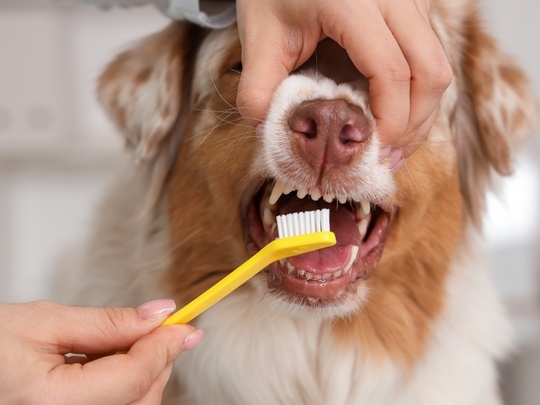
Once your dog accepts the toothpaste, introduce a soft pet toothbrush. A suitable brush should allow you to reach the teeth comfortably without irritating the gums.
For puppies or small dogs, a finger brush or appropriately sized toothbrush may be easier to handle. If you are unsure which option fits your dog, ask your veterinary care team for guidance.
4. Focus on the Outer Tooth Surfaces
Gently brush along the outside surfaces of the teeth, especially near the gumline. Plaque and tartar tend to accumulate quickly on the cheek-facing surfaces of the upper teeth.
Use gentle movements rather than scrubbing aggressively. Sensitive gums can become irritated if excessive pressure is applied.
5. Build Toward Regular Brushing
Daily brushing is considered the ideal routine for maintaining oral hygiene. However, if your dog is not ready for daily brushing, start with manageable sessions and gradually increase frequency. Consistent brushing is more realistic when your dog is comfortable with the process.
VOHC notes that regular brushing is beneficial and that any consistent brushing activity is better than none.
What Are the Signs of Dental Problems in Dogs?
Dogs can develop plaque, tartar, gingivitis, periodontal disease, and painful dental conditions. Unfortunately, some dogs continue eating normally even when their mouths are uncomfortable, so subtle changes deserve attention.
Common warning signs include:
- Persistent bad breath
- Yellow or brown buildup on the teeth
- Red, swollen, or bleeding gums
- Excessive drooling
- Difficulty chewing
- Dropping food while eating
- Chewing primarily on one side of the mouth
- Reduced interest in hard foods or treats
- Pawing at the mouth
- Facial swelling
- Loose, broken, or missing teeth
- Changes in appetite or eating habits
Bad breath should not automatically be considered a normal part of getting older. It can be a sign that plaque, tartar, gum inflammation, or another oral problem needs veterinary attention.
When Does My Dog Need Professional Dental Care?
Home brushing helps control plaque, but it does not replace professional veterinary evaluation when dental disease is already present. Once significant tartar develops, brushing alone cannot safely remove hardened deposits.
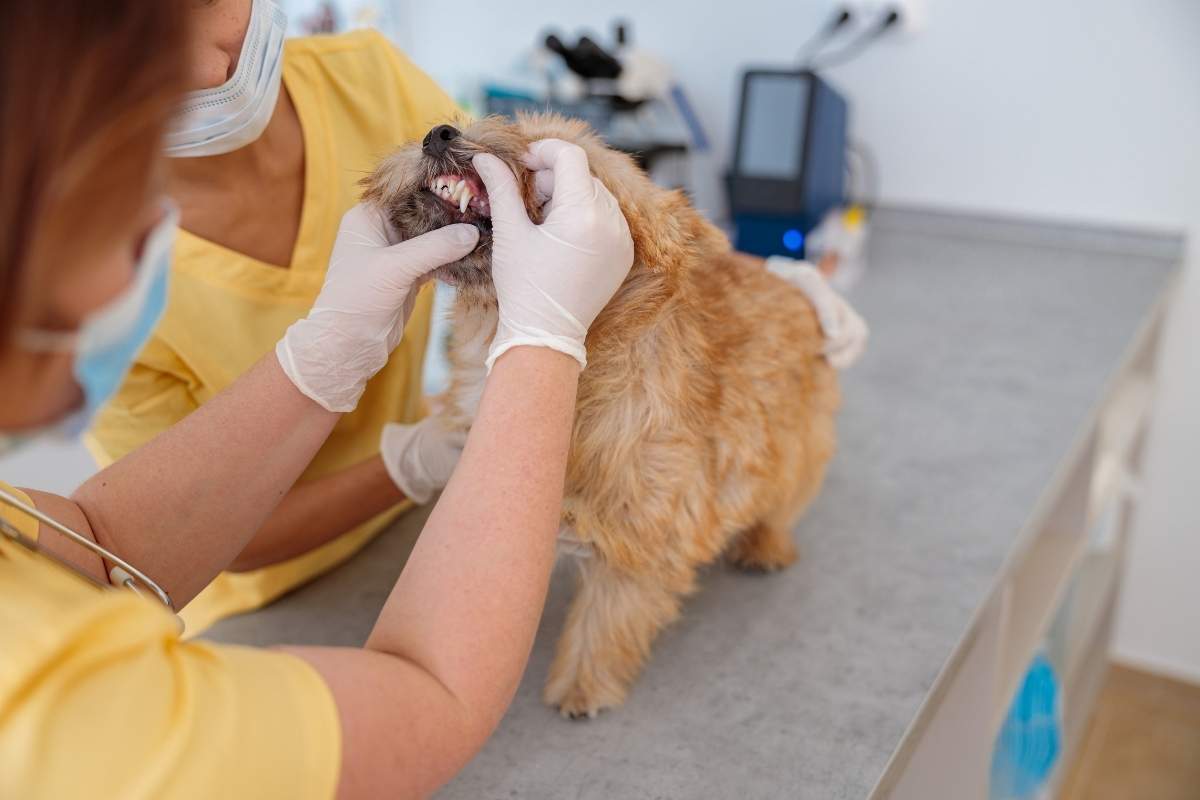
A veterinarian can examine your dog’s mouth and determine whether professional dental treatment is appropriate. Depending on the findings, dental care may involve a comprehensive oral examination, professional cleaning, dental radiographs, or treatment of diseased or damaged teeth.
Professional dental care can be particularly important for dogs with persistent bad breath, bleeding gums, loose teeth, oral pain, or visible tartar.
For pet owners researching pet dentistry charlotte, it is important to consider both preventive home care and professional dental assessment. A personalized veterinary dental plan can help address current problems while establishing a practical routine for maintaining oral health at home.
How Can I Prevent Dental Disease Between Veterinary Visits?
A consistent home-care routine can make a meaningful difference in your dog’s oral health.
Consider these habits:
Brush Regularly
Use dog-specific toothpaste and a soft toothbrush. Aim for daily brushing when possible, while gradually introducing the routine to dogs that are resistant.
Choose Dental Products Carefully
Dental chews, diets, water additives, wipes, and other products may provide additional support. Look for products with credible evidence behind their dental claims, including options carrying the VOHC Seal when appropriate.
Monitor Your Dog’s Mouth
Take a few seconds during routine grooming to look at the teeth and gums. Early changes are easier to address than advanced dental disease.
Schedule Routine Veterinary Examinations
Regular veterinary examinations allow oral problems to be identified before they become more advanced. Some dental disease develops below the gumline and cannot be fully evaluated by simply looking at the visible teeth.
What Should I Do If My Dog Accidentally Eats Human Toothpaste?
If your dog accidentally swallows a small amount of human toothpaste, do not assume that every exposure will cause an emergency. The level of risk depends on the ingredients, amount consumed, and your dog’s size and health.
However, check the product label immediately. If it contains xylitol, contact a veterinarian or animal poison service promptly because xylitol exposure can be dangerous for dogs.
Do not induce vomiting unless a veterinary professional specifically tells you to do so. Keep the toothpaste container or ingredient list available so the veterinary team can determine what your dog was exposed to.
The Bottom Line: Use Dog-Safe Toothpaste
Human toothpaste is not an appropriate choice for dogs because it may contain ingredients that are unsafe or unsuitable for swallowing. Xylitol is particularly concerning because it can cause severe toxicity in dogs. Fluoride, sodium, detergents, and other ingredients may also cause problems when swallowed regularly.
Instead, choose toothpaste made specifically for dogs and pair it with regular, gentle brushing. Veterinary examinations and appropriate professional dental care are also important for identifying problems that home care cannot resolve.
For pet owners in Charlotte, NC, maintaining a consistent dental routine can be a simple but valuable part of overall preventive care. If you are concerned about your dog’s breath, gums, teeth, chewing habits, or oral comfort, schedule your appointment with Riverbend Veterinary PetCare Hospital for an individualized assessment and dental-care guidance.
FAQs:
Q1. Can I use a small amount of human toothpaste on my dog?
Ans: No. Human toothpaste is not formulated for dogs to swallow and may contain ingredients that can cause digestive problems or toxicity. Use toothpaste specifically formulated for dogs instead.
Q2. What happens if my dog eats toothpaste with xylitol?
Ans: Xylitol can be highly toxic to dogs and may cause dangerously low blood sugar and potentially serious liver complications. Contact a veterinarian or animal poison service promptly if your dog has ingested a product containing xylitol.
Q3. How often should I brush my dog’s teeth?
Ans: Daily brushing is the ideal goal for canine oral hygiene. If your dog is new to toothbrushing, begin gradually and build up to a consistent routine. Regular brushing is preferable to occasional brushing.
Q4. Can I brush my dog’s teeth without toothpaste?
Ans: The mechanical action of brushing is important for removing plaque. However, a pet-safe toothpaste can make brushing easier and may provide additional plaque-control benefits. Never substitute human toothpaste or baking soda.
Q5. What is the best toothpaste for dogs?
Ans: The best option depends on your dog’s individual needs and tolerance. Choose toothpaste formulated specifically for dogs and consider products with the VOHC Seal of Acceptance. Your veterinarian can also recommend an appropriate product for your pet.
Q6. Does bad breath mean my dog needs a dental cleaning?
Ans: Persistent bad breath can be a sign of dental disease, although it does not by itself determine whether a professional cleaning is needed. A veterinary examination can identify plaque, tartar, gum inflammation, damaged teeth, and other oral problems and help determine the appropriate treatment.